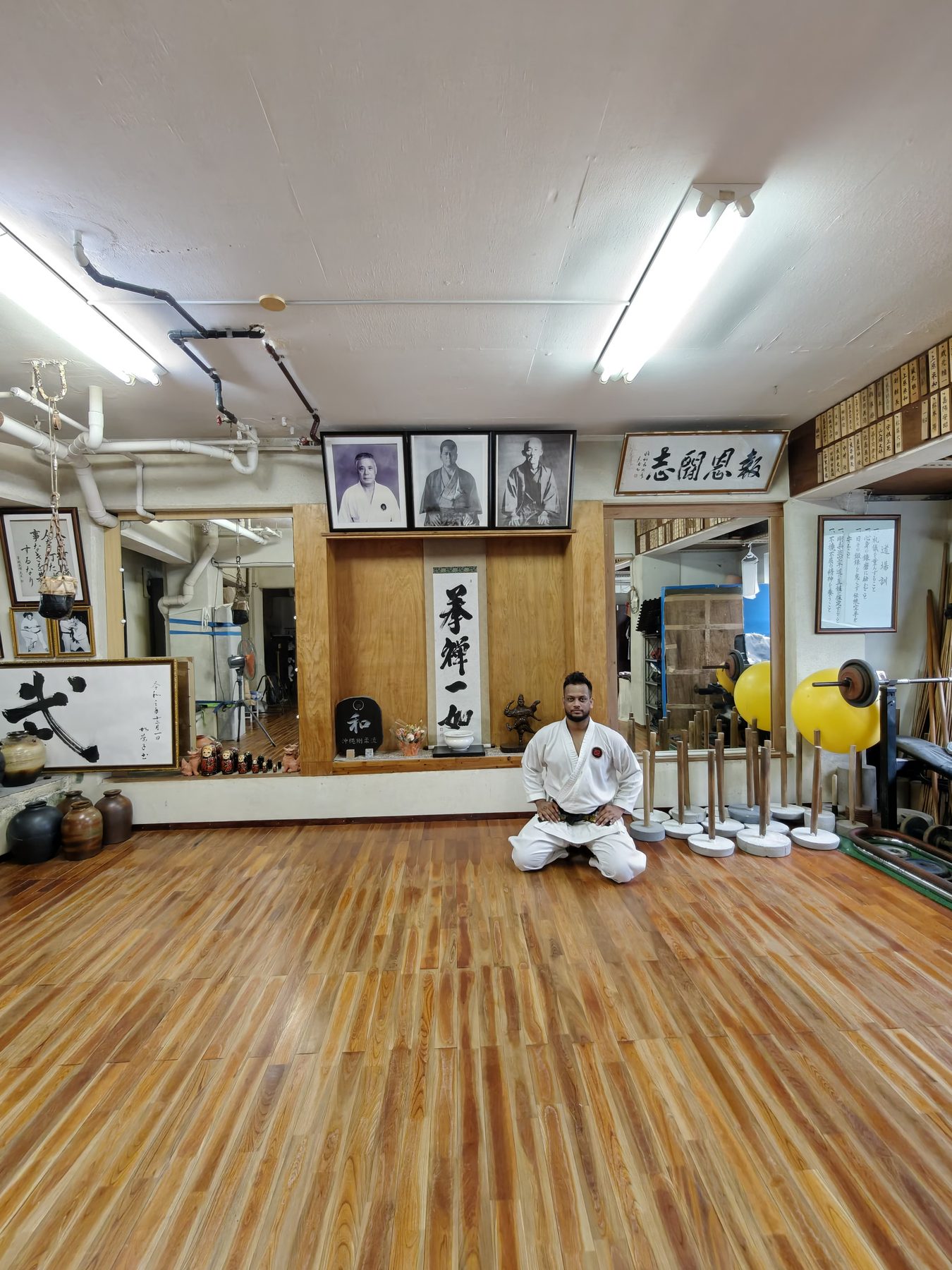
Karate began as survival combat, unarmed and practical. Over time, masters shaped it into an art of discipline, courage and control. Today sport keeps it alive, but true mastery blends art and martial, forged through lifelong training and lived daily as a way of life.
Where it began
On Okinawa, ordinary people developed empty-hand methods to protect themselves and their families. These methods were practical first: strike, block, grab, escape. There were no medals and no points, only the question of whether the technique worked.
How masters shaped it
Teachers such as Kanryo Higaonna, and later his student Chojun Miyagi, the founder of Goju-Ryu, refined these methods into a complete system. Goju means "hard and soft": hard techniques are balanced by soft, circular movement, and tension by relaxation. Breathing, posture and conditioning became as important as fighting skill.
Strength without control is dangerous. Control without strength is empty. Goju-Ryu trains both.
Sport versus martial art
Competition has helped karate spread around the world, and we respect it. But at TOGKF India our focus is to preserve and pass on karate as a traditional martial art of self-defence and not only as a sport. That means kata practised with real application (bunkai), conditioning through hojo undo, and the patience to repeat the basics for years.
Living it every day
The discipline you build in the dojo shows up outside it: in how you study, how you work, how you treat people and how you handle pressure. That is what we mean by a way of life, and it is why our students keep training long after their first belt.